Thursday, 19 September 2013

Eddie Harris - Excursions


Excellence in Turbulence

I was introduced to Eddie Harris via his superb 1969 album Silver Cycles, reviewed here, and have dipped in and out of his work ever since. This Atlantic record collects together material from the years 1966, 1968 and 1973 so it is a little eclectic, but it isn’t anything one wouldn’t expect, thankfully.

Opener Drunk Man is delightfully chaotic with its shambolic [and distorted] vocal and other assorted sounds thrown across the jangled bells, slapping percussion, simple Varitone sax riff, and horn spurts: pissed funk really! Next Renovated Rhythm is much more straight-laced by comparison, but this does establish the variables that add overall spice to expected fine playing. Third Inapplicable Concord is a wonderful horn ensemble piece, and fourth Listen Here Goes Funky performs its title with aplomb, the Varitone again, and a funked-up female backing chorus [Vivian Harrell, Marilyn Haywood, Mary Ann Stewart] punctuating and accentuating the overall groove.

Fifth is special, the psychedelic Turbulence and reminding of what appealed about Silver Cycles at the time of its release and when I, like others, was discovering the thrill of such explorations. The opening two minutes are electrified, literally, and it then moves into a different kind of electrified playing, ‘straight’ horn and sax duelling at pace, before segueing into another funked groove and Eddie on Varitone - his trademark - teasing out new sounds. This is followed by circus organ punches, dancing bass, and then an eruption of percussion and Harris on swirling saxophone before segueing into another groove but more conventional jazz territory. Next come more organ punches with a Varitone return, and then piano cascades are overlaid with a fuzzed bass and more manic sax arguments. At twelve minutes into this sixteen minute gem we have returned to a simply strummed electric guitar rhythm and piano runs until Eddie’s sax re-establishes the funky groove to gradually slow and then ignite one final time in a hectic close. Blissful.

Fragmentary Apparitions [seventh track, or first of disc 2] has some great trombone playing by Billy Howell to open, and then similar trumpet from Ray Codrington - Leon ‘Ndugu’ Chancler laying down excellent drums and percussion. Ninth [or...] Aleph the Fool has some sprightly and apt discordant playing to start, whilst next Recess also opens with some wild duelling between Harris and Codrington: though both of these ‘settle’ into more conventional albeit fine jazz melodies.

Closer Oleo has some sweet unaccompanied soloing from Eddie on tenor, vocalising into the reed as he blows, and the rest of his playing with the band is simply stunning – but then all of it is. A full players' list can be found here.

Carla Bley, Andy Sheppard, Steve Swallow - Trios


Softly Softly

This should be late-night fare, though third Les Trois Lagons [d’apres Henri Matisse] is bebop lively enough at the start, Sheppard’s sax dancing along with Swallow’s bass, but even this slumbers down to a meditative motion.  It is the slower and becalmed numbers/moments that caress most, as with opener Utviklingssang where Sheppard’s suspiring saxophone softly soothes. New to Bley, I found a recording of this song from her 1981 album Social Studies here, and it is interesting to compare the change in pace and density, this initial version horn heavy, but the Trios’ version a barer affair. Both gorgeous. Indeed, all songs on this latest album are reworkings of Bley originals and I have some further enjoyable discovering to pursue.

Tuesday, 17 September 2013

Johnny Sansone - Once It Gets Started


Playful Pie

This is full of gutsy blues where Johnny Sansone’s amped harmonica and growled vocal combine to swamp even the thundering riffs of his backing band, Maggie Koerner on fine vocal support here and elsewhere. There are subtleties too, as with fourth The Night The Pie Factory Burned Down, a lament for the metaphor that is his burnt heart rather than the cherry, apple or fudge variety [I didn’t say the figurative lyricism was subtle, I meant the slower sound], Sansone playing a subtler harmonica here too – no need to amp these crisp notes.

But it’s stomping opener Once It Gets Started that grabs the attention, and you can hear a fine live version here. No other track really quite matches, though second Back To You romps loudly – this dual start genuinely rousing – but the blues grooves do continue to delight, as with sixth, hand-clapped chugger 9th Ward Landlord. Ninth Ranton With Stanton foregrounds some stonnking harmonica and more thundering back-up. Penultimate and tenth Goodbye is a beautiful instrumental with acoustic guitar and lamenting harmonica.  

Kings of Leon - Mechanical Bull [stream]

Titchy Tease

That didn't last long. You can hear a stream of their latest on iTunes, this site directing you to it.

It is an excellent album, if you like the Kings of Leon. An obvious assertion, but this is their consummate sound: rockpop [I won't call it Indie, though there are elements] with immediate singalong hooks - Wait For Me for example - and the distinctive vocal of Caleb Followill, which I can imagine some not liking though I personally can't imagine, if you get my paradoxical drift, but thus the opening platitude. Bass lines are tight but prominent as one would expect, and the guitar work shimmers and pings depending on the track, another antithesis, but this one an actuality. There are the pure rockers too - Don't Matter and Family Tree [rather funky].

Kings of Leon - Mechanical Bull

Tease


Sunday, 15 September 2013

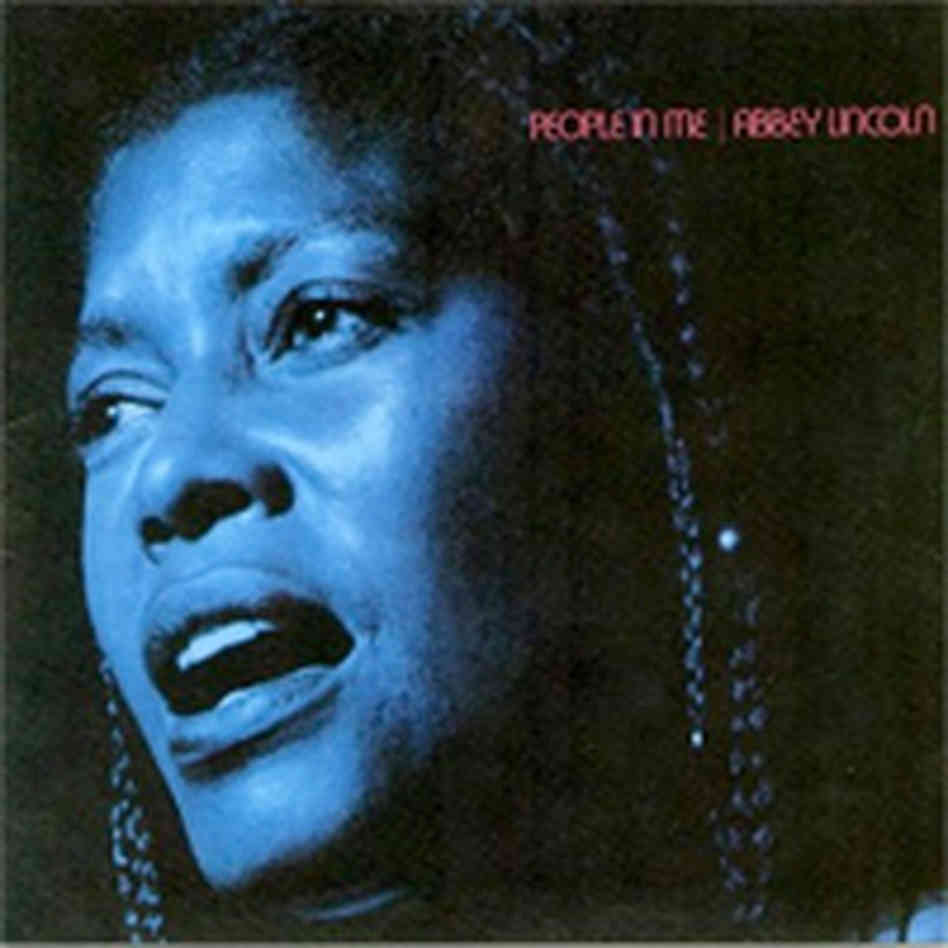
Abbey Lincoln - People In Me


Peopled

This is a fine vocal album, released in 1973. Opening track You And Me Love is sweet if quite standard, but second Natas [Playmate] immediately enlivens the pace with a dual vocal that is playfully apt. Third Dorian [The Man With The Magic] has some neat soprano sax played by Dave Liebmann. It’s the mid section that interests and engages most: fourth is John Coltrane’s Africa, to which Lincoln has set the lyrics that inform her next and title track People in Me, but also the acquisition of her African name Aminata Moseka. Here on Africa Liebmann again provides saxophone accompaniment – a strong tenor support – and Lincoln’s vocal rises to a joyous, triumphant growl. Fifth People In Me is her personal anthem as she declares her global ethnic roots as well as the whole of Africa turning in me.

For some stunning social sass, check out Driva Man here, Abbey singing with [soon to be] husband Max Roach and band a song from his Freedom Now Suite - an album I will review too.

Bill Evans - Symbiosis

Our Shirt Symbiosis

Back in the Seventies I wore collars like the winged expanse in the picture below – bigger, probably, though not that colour, and not with a jacket quite so also colourful – and on the theme of expansiveness, this orchestral jazz album does just that with at times quite sweeping strings in a seventies filmic thematic way, as with Symbiosis 1st Movement [Moderato, Various Tempi]: C where Evans’ electric piano plays within the swarming, but it is the saxophone wash in the second part of this track that I like most which echoes that of the preceding B part where Evans punctuates this ensemble playing with electronic piano blasts. At times the album is a little symphonic-lite, though really quite pretty, as with Symbiosis 2nd Movement [Largo – Adante – Maestoso – Largo]: A, and Evans’ piano playing here is delicate and also pretty. The second part of this second movement is quite dramatic, orchestrated horns adding to the constructed tensions. Overall, the music is much more interesting than the shirt.

Saturday, 14 September 2013

Aasta May


[i.m. A.M.F., 5th May, 1927 – 14th September, 2005]

With our shared love of words, I wish I had spent
more time valuing the long and short of it all – the
beautiful balance of a vowel in your name, saying
I could leave when perhaps I should have remained,
then living so far away it would always be down to
the language to keep us close, expressions of love
never lost yet stretched across years and miles. Reading
between the lines of that distance is another act of poise,
but there are no shortcomings then or now, and these
words will not be rhymed to be more than sound.

Not yet. Your writing was always honest and true –
poetry and letters to a son in England, an amalgam
of our roots and selfless hope for my future, showing
me how to keep it simple: always Mom, not Mum.

Friday, 13 September 2013

Valerie Carter - The Way It Is


Sweet

Have received and am listening to Valerie Carter’s 1996 album The Way It Is. As with her first two from the 70s, and considering those with whom she has played – Lowell George, Jackson Browne, James Taylor – the songs on this album reflect that folky, singer/songwriter and occasional funkier genres, and indeed Browne, Taylor, Linda Ronstadt, Phoebe Snow and Lyle Lovett provide quest vocals on the album, Lyle on the rockier/soulful number Who Is She [and what is She to You]. There is a gorgeous version of Neil Young’s Birds, and Van Morrison’s Into The Mystic gets a vocal rendition that again reminds of Rickie Lee. In reminding readers that such references are touchstones and compliments – usually – eighth track When The Blues Come to Call reflects Carter’s vocal perfectly on its own, quite perfect. Ninth and penultimate I Wonder Why - as with previous, written by Tom Snow – is one of the funkier tracks: great guitar by Mark Goldenberg and possibly James Harrah, and a vocal ensemble [not clear which of the luminaries are collected here] that is sweet sweet sweet. Tom Waits’ song Whistle Down The Wing closes the album, and Carter sings this beautifully - Goldenberg on accordion; Novi Novog on viola.

And I have just discovered the hidden track at the actual end, Earth, Wind & Fire's That's The Way of the World [Hearts Afire], and it is a stunner, Carter locking vocal horns with Phoebe Snow in a dynamite cover. That's what I call a bonus.

Not loads about Valerie, foreground, on the net: I think this might be backing James Taylor