Sunday, 13 November 2011

Thea Gilmore- Don't Stop Singing

Beautifully Melancholic

This isn't difficult to review: it is beautiful. Setting music to the lyrics of Sandy Denny, Thea Gilmore has produced an album of songs that act both as elegy and eulogy 33 years after the tragic death of Denny. Gilmore employs quite lavish orchestration at times to perhaps revisit the sound of the seventies a la Sandy, but the voice is her own - rather than imitation - and it is mature, full and gorgeous. Wonderful harmonies too. As has been noted by other reviewers, the closing song Georgia has a heightened poignancy in that it serves as a lullaby for the daughter Sandy never really got to know. The lyrics overall are notably melancholic and Thea Gilmore must take huge credit for producing so much beauty with these, for example Long Time Gone.

I got to see Sandy Denny perform live in the early 70s at St Matthew's Baths in Ipswich. I wish it had been more often.

Saturday, 12 November 2011

John Steinbeck - Burning Bright

Artifice Alight but Alright

If you teach GCSE English in this country, John Steinbeck's Of Mice and Men is the holy grail of engaging in educational pragmatism: teaching a book of unquestionable literary quality that is accessible, meaningful, challenging and examinable for all. That this is the only prose literally hundreds of thousands of young people here will ever know in any depth is both glorious and despairing, but I'm not pursuing that paradox now. Come January 2012, my next examination period, I will no doubt be reading and assessing hundreds of more OMAM responses, and I love it.

Like the other millions who know Steinbeck's work well, I am a devoted fan, both as reader and teacher. I read most of his work when I was 19 years old: in brief, whilst working on the farm I once spent a few weeks driving a tractor and trailer that collected silage and this entailed long periods of simply waiting my turn to have the latter filled, and in these moments I read Steinbeck's novels, there in the tractor cab. That said, I do recall exactly where I was when I finished The Grapes of Wrath, my favourite novel of all authors: in the small second bedroom of my cottage. I can't remember where I was when JFK was shot, or the moon landing, but I do when I read that astonishing ending. And what a colossal work: the storyline, the politics and philosophy, the dialogue, the intercalary chapters with their metaphoric reflections, the biblical prose and the expansive descriptive narrative.


This is by way of introducing and writing briefly about Burning Bright which I have just finished. As I said recently, I thought I had read all of Steinbeck's work but found this untouched on the shelf. It is problematic as a read in a way his other work isn't. I chose not to read Steinbeck's own forward at the beginning, though I did after the first Act, a clue I had missed when I began. The opening descriptive detail is classic Steinbeck, for example in the introduction to Joe Saul,

A lithe and stringy man of middle age, Joe Saul. His jaws muscled against strain and cables down the sides of his neck. His arms were white and blue-veined, with the long chords of clinging and hanging rather than the lumps of lifting. His hands were white, the fingers spatulate, and palms and fingers calloused from the rope and bar.

The setting for Act One is a circus, and the opening detail is typically taut and clear in presenting place and the four main characters: Joe Saul, Friend Ed, Mordeen and Victor. We see immediately the tent where Joe is getting ready to perform and the stubbled field where this and others are pitched. We also see immediately that he is a trapeze artist and Friend Ed is a clown, and so on. Simple and succinct and vivid. It is soon apparent, however, that the dialogue is full of artifice. When Friend Ed enters, he speaks with a knowing that doesn't ring true, but background detail - Joe's loss of his wife and partner - is quickly conveyed in the rather heavy opening exchanges.

At this point I sensed the theatricality of the dialogue and turned to the forward where Steinbeck talks about the experimentation of writing this as a 'play novelette' and his rationale for doing so - obviously referencing the roots of this in Of Mice and Men - so my instinct was correct though I should have known this anyway, considering myself to know his work well!

And here is an example of the artifice and melodrama in the speech,

Joe Saul stirred. 'Yes, I know that. But something like a ceremony, something like a golden sacrament, some pearl like a prayer or a red flaring ruby of thanks. Some hard, tangible humility of mine that she can hold in the palm of her hand or wear dangling from a ribbon at her throat.'

The artifice is carried into the structure too, the four Acts taking us with the same characters and situation/plot into wholly different contexts - from circus, to farm, to the sea [on a freighter], and to a hospital room. The central plot twist is also quite evident near the end of Act One, so it is a highly crafted, and visibly so construction. As a tale of love, friendship, self-sacrifice, deceit and human compulsion, it tackles the major literary and real human themes. I think I would find a stage production as inevitably stilted, and because Steinbeck attempts to embrace both prosaic and theatrical genres, it is ultimately - but because it is him - a jack of both and marginal master of each. And perhaps my experimental appropriation of a summation is equally contentious.

So would I recommend it? Of course - it's Steinbeck! Even with the stylised dialogue and plot projection I found the story compelling, from simply wanting to know how it ended, to being fascinated by the experimentation and wanting to see/read it through. When first published in 1951 [as a companion piece to The Pearl; it was first published as a single volume in 1971] it was, apparently, criticised in reviews both as prose and as a play, though the experimentation was acknowledged more positively, this a little condescending though if I'm honest I suspect I too value it for this creative impulse over its realisation.

I have located a video version of a 1959 stage production of Burning Bright and I am intrigued enough to want to see if I can get this. I wasn't able to find a picture of my single volume Pan edition, but I do like the two versions I did find, which both focus illustratively on BB rather than The Pearl [the latter of course highly regarded] and it is interesting how those images so clearly 'sell' the human relationship drama as soap opera!

Mary Hampton - Folly

Delightfully Disturbing

The vocal is quintessentially 'folk' without question: soaring at times, piercing, falsetto-fine, haunting often, traditional and then quirky. The quirkiness is perhaps more in the unusual instrumentation at times - with occasional ambient/random sounds - and the use of recorder and the humming moan of harmonium. This adds to the haunting sounds too. The strings of her backing band Cotillion are either soft in the background as in Lullaby for the Beleaguered with its rolling and at times complex but beautiful harmonies [waves lapping in the background too], or chamber fresh in Kiss V where a discordant guitar-pluck unsettles throughout. I like these additional dissonant sounds within the mix. It unsettles but also prevents the songs and singing from becoming folk-twee. A song like Forget-Me-Not with its monotone harmonium, sharp recorders, brooding very occasional bass and echoing harmonies really does disturb delightfully. A genuinely interesting collection.


Friday, 11 November 2011

Drowning


It is proverbial as well as fact
that water can cut through rock,
and if I had its fluid power now
I’d carve out a valley from your stone;
this water would fight fire too
should you ever decide to burn.
But after all of these years I have never
flowed; and being more the river bed
you will have desired a rain-dance
not demanding but full of hope.
There is never enough, or too much in
the wrong places, and whether divining
or waiting for nature to take its turn
this drought will be your drowning.

Thursday, 10 November 2011

My State of Reading

I know I don't read enough. Apart from my recent rapture in reading Willy Vlautin's three novels, I tend to dip in and out of poetry and don't read the prose/novels I should. I need the sun I think. I love reading outside in the sun. I'll have to move.

I did start two books today, finishing one, Roger McGough's lovely Penguin collection The State of Poetry.


I've read all of these poems before, but it's a mainly humorous set that had me laughing out loud on a number of occasions. Here's just one:

Scintillate

I have outlived
my youthfulness
so a quiet life for me.

Where once
I used to
scintillate

now I sin
till ten
past three.

It was a wonderful time to be growing up and getting into poetry when Penguin Modern Poets 10 - The Mersey Sound came out in 1967 featuring Adrian Henri, Roger McGough and Brian Pattern. Poetry was then hip and irreverent and funny and so much of an inspiration to try and be similarly creative. These guys didn't make it seem complex or difficult. This and all those psychedelic lyrics made language such a hoot. Buying this book then was a cool thing to do. I will have bought mine probably in '68 - maybe even '69 - but still 14 or 15 years old.


Not that anyone reading this will need convincing, but McGough is a fine poet. Defying Gravity is such a strong collection. As well as this and others of his, I do prize his 'novel' Frinck  A Life In The Day Of and Summer With Monika poems, as well as An Imaginary Menagerie.

The other book, by the way, is John Steinbeck's Burning Bright. I thought I had read all of his but found this untouched at 30 pence for my 1974 Pan edition. Very mixed feelings about this at the moment. I'll write about it when finished, if anyone is interested.

Wednesday, 9 November 2011

Shannon McNally - Western Ballad

Prairie Poetry

Western Ballad has an uncertain start with opener Memory Of A Ghost’s heart-beat percussion and haunting guitar calls suggesting musical intrigue, but it suddenly rolls into a formulaic ‘cowboy’ song with its rather simple melody – yet I guess that’s the point of what McNally calls her ‘North American Ghost Music’ sound, as well as interest in Native American and roots culture, this latter aspect also reflected on the first track with its ending chant-call. The second High Western is also a slow and simple number, certainly a far cry from the rock and blues of her preceding and excellent album Coldwater. Even third When I Am Called continues this restrained but folksy sound, though accordion and vocal harmony enliven it by comparison.

My interest is aroused by fourth Western Ballad, a more emotive song with McNally’s vocal aching and full, a military snare and reverb guitar also adding the first sonic gravitas to this wonderfully poignant Allen Ginsberg poem set to music,

A Western Ballad

When I died, love, when I died
my heart was broken in your care;
I never suffered love so fair
as now I suffer and abide
when I died, love, when I died.

When I died, love, when I died
I wearied in an endless maze
that men have walked for centuries,
as endless as the gate was wide
when I died, love, when I died.

When I died, love, when I died
there was a war in the upper air:
all that happens, happens there;
there was an angel by my side
when I died, love, when I died.

It is the second half of the album that engages more. Sixth Tristesse OubliĆ©e reflects McNally’s recording of this album with fellow performer/writer Mark Bingham at New Orleans’ Piety Street studio.  Eighth Rock and Roll Angel is a slowly strummed guitar lament in the style of Emmylou Harris. Ninth Toast is positively funky in contrast with the overall pace of this album, and McNally’s soulful singing rides it out sensuously. Penultimate number Little Stream of Whiskey returns to the military drumming of earlier, and this more quirky piece has McNally singing a yo-yo range but also cutting some crisp Country guitar licks. This is a neat foil to the closing ballad In My Own Second Line which is the strongest song of all - a brooding and poetic track.


By The Way

I don’t want you, by the way, and it was
turning that conversational aside into a
subordinate clause - which I recognised
from my good education - that spurred me
to such anger, as if I needed this extra
information to close the slanted
wooden doors to the cellar of despair
and the dream to darken way down there.

Do you see what I did, by the way?
In the poker game of this affair
my metaphor so clearly beats the syntax
of your grammatical hand, and the rhyme
played then and any moment soon
brings our love to this discordant ruin.

Tuesday, 8 November 2011

Shannon McNally - Coldwater

Free Coldwater

Having referred to McNally in my previous post, I thought I'd mention this deal: if you sign up on to her Facebook page via this link http://www.beat-surrender.com/2011/04/24/shannon-mcnally-coldwater-free-album-download/] you can download 7 of the 8 tracks from her excellent Coldwater album. That seems like a good deal to me, especially as this is fine country/americana music from an established artist.

Opener This Ain't My Home is a light rocker with Shannon's mildly twanged vocal drawling wonderfully along the riff. Second Jack B. Nimble is more ostensibly Country fare and all the more appealing for that - for this musical cowhand. Third Lonesome, Ornery and Mean is important because it employs one of the few intrinsic American words I still use and which seems to flummox local listeners. Fifth Bohemian Wedding Song is an acoustic track with sassy McNally vocal and Knopfleresque guitar from the Hot Sauce Band. Sixth Freedom To Stay is a slow emotive gospel blues with some soaring harmonies. Seventh Bolder Than Paradise has more tight guitar work supporting the funky vocal here. The album ends with a thoughtful if straight cover of Dylan's Positively 4th Street. This is a great little album and an even greater freebie.


Hazy Malaze - Blackout Love [2005] / Connections [2010]

No Malaise Here

Neal Casal's solo work is something I need to explore more, his 70s singer/songwriter proclivities obviously playing to my own, though he obviously creates whilst I listen.

There's nothing hazy about Casal's pedigree: from his solo career, to playing guitar for the Cardinals in support of Ryan Adams, then to his other dalliances with Shannon McNally and Tift Merrit, and most recently joining the Chris Robinson Brotherhood. Another 'sideline' is his band Hazy Malaze with drummer Dan Fadel and bassist Jeff Hill, this trio playing sublime rock and soul.


Blackout Love is the more soulful of the two with opener Everything full of funk and hip harmony. Second Looking Out For You has the tightest rhythm working its funk'n'harmony, stabbed guitar chords like an hypnotic pulse. Third Dirty Summer celebrates its rock roots a la Radar Love. Stand-out track is fifth Bust It Down which is Richards' Rolling Stones par excellence and exemplifies Casal's stated ambition to play like Keith. Get down. This album oozes cool.


The recent Connections is more rock and roll and just as much fun. Opener Get Free is punkrock in its pace. Next two On The Tarmac and Connections take the blues as their cue for harmonica and slide moves. Fifth Can't Just Give It Away reminds us that the funk groove hasn't been jettisoned: some sweet singing on this one too. These are two superb albums from an artist spreading himself around with aplomb. I look forward to his imminent solo work Sweeten The Distance, due for release here in a week's time.

No Bones About It

Against the Wheel - Bones

Against The Wheel is a kick-ass rock/metal band playing in and around the Birmingham area. Here are your archetypal journeymen: full day jobs then evening practice and gig sessions, building up a core of local fans and playing for the pure fun and joy of it all. It's what music is all about out there in the thousands and thousands - stonking sounds that will always struggle to compete with industry darlings, incestuous deals, airplay favs and genuine competition. Band members are Dan Ratcliffe - Lead Guitar, Gavin Flint - Rhythm Guitar / Lead Vocals, Kelvin Hayward - Drums, Jeff Gowen - Bass Guitar / Backing Vocals

Recent recording Bones is one of their tracks that I rate highly, and I could hear this played on Planet Rock - or similar - and judge it suitably placed with so much else of this pulsating calibre. It appeals especially because of the strong melody over thundering bass and fine guitar playing. It's a clever song too with a climatic 'false' ending and developing layers beyond simple headbanging, not that there's anything wrong with that. As anyone reading this blog knows, I'm a sucker for the harmony and heavy coalescence - beauty meets the beast music. Bring it on.

Check out this track and others on their facebook page.

Monday, 7 November 2011

Birdy - Birdy

Fledgling Flight

This is interesting for so many reasons: another female vocal at a time of such sweet saturation [Feist, Camille, Florence Welch, Phoebe Killdeer to name a few]; appearing first on youtube and within the contemporary public infatuation for promo-rich, X-Factoresque ratification - attained with bells on at 7 million clicks for her version of Bon Iver's Skinny Love, and aged only 15, her youth adds to the overall mystique and excitement that announces this new artist and release.

Jasmine Van den Bogaerde [aka Birdy and already packaged according to a requisite twee appellation] certainly possesses a powerful, pure voice. The 14 tracks on this debut album do occasionally contain over-dubs and layerings, but generally the production - from a stellar cast of participants, by all accounts - foregrounds the vocal. I feel my age [oh in so many ways....] when of these 14 tracks I really only know two well: Fleet Foxes' White Winter Hymnal - from a band who themselves timewarp sounds from the 70s - and James Taylor's Fire and Water, which suggests Birdy has been dipping into the grandparents' vinyl. Or she's taken some astute advice on appealing to the genuinely mass market. I wasn't aware of the 7 million youtube audience appeal and accolade until reading recent and overall most favourable reviews, especially from the quality newspapers who can articulate with sharp tongues or approving sagacity, the latter reigning at the moment. Most confirm a promising start and future, and on my first tentative listen I would agree.

Skinny Love definitely reveals a strong and emotive vocal. People Help The People also places the vocal up front and knowing, though I wouldn't characterise it as distinctive which is a clear nitpick within the obvious excellence - but that links back to the reality of needing to establish an identity within a market of extremely strong female voices. Especially when the youth vote wanes. Terrible Love is a song that almost gets lost within the over-production of strings accompaniment, but the singing does hold its own which says much for Birdy's incipient vocal presence. A good aural test for me is the Taylor version. It's sound enough and what stands out - as it seemingly should - is that clear, confident vocal, and that is where the current and only 'problem' exists: that this track is as solid, but not necessarily different and distinctive from all the other strong tracks. Again, as many reviewers have already noted, self-penned Without a Word reveals enough promise for the future to make this release exciting and significant.

Jordie Lane - Blood Thinner

Blood Brothers

This is Melbourne singer/songwriter Jordie Lane's third album and it is a direct and simple recording of carefully crafted songs beautifully sung.

There are 12 numbers and Jordie is occasionally accompanied by female harmony vocal, as on opener Diamond Ring which is a slow and sweet song with banjo, guitar, accordion and simply struck piano notes. It has a warm echo of Welch and Rawlings. The second Annabelle Marie, and many others like Old Time Spell on this wonderful recording, remind me strongly of Ron Sexsmith in his early writing.

These songs were apparently recorded directly onto 4 track as homage to Springsteen's Nebraska, and fifth track Feet Fall, with its passing freight train call at the start, most reflects the Boss - but all these references/influences simply reflect the genre Jordie Lane shapes lovingly to his own sound in this blood-brothers performance pact.

Eleventh track I Just Can't Take It Anymore is a Gram Parson's cover and is as straightforward as it could be. Closer I Sinned Today is again simple in its banjo and organ-chord delivery and affirms the predominantly Americana roots of the whole with this gospel confessional and its gentle gospel chorus. A lovely listen.


Buddy Rich - Wham! [Recorded Live in Detroit, Michigan & Dix Hills, New York in 1977]

Breakfast Buddy

A morning musical maelstrom. Having recently reviewed Buddy, I came across this album and have been listening this morning: what a rousing way to wake! Outstanding.

Thursday, 3 November 2011

William Shatner - Seeking Major Tom

Not Far Out Enough

It is a musical voyage home for Shatner as these songs about space return him to his spiritual and stardom roots. First actual song is second track, Bowie’s Space Oddity, and with such colossal and memorable quality in the original, any version, especially such a lethargically spoken and emotionless reading as Shat’s, risks being pastiche, excusing the platitude. This isn’t the best start and you’re wondering where it will go. In addition there’s a further performance dimension to this problematic concept album: established musicians have provided their support, but does it work at any level? On this track, Richie Blackmore offers some distant licks, but these are just background rock riffs rather than spaced-out jams. However, the range of these guest artists is amazing, for example next track In A Little While featuring Lyle Lovett [!] who gives a concluding vocal, but little else of distinction. Third track Space Cowboy features Brad Paisley and Steve Miller, the pair ripping some proper licks to create a dynamic mood. Even Shatner’s spoken vocal develops some semblance of empathy. Yet as musically [comparatively] enriched as this track is, with Country picking meeting it’s rock opposite in a space time continuum – and it is solar -  it’s still essentially humorous. Obviously!

Other musical luminaries attracted by the black hole pull of this album include Johnny Winter, Steve Hillage, Bootsy Collins, Peter Frampton, Sheryl Crow, Michael Schenker, Warren Haynes, Zakk Wylde and Steve Howe. By the time we get to sixth Rocket Man - so quite early on in this 20-track celestial journey - the joke has waned for me. Shatner takes the line long long time as literal notation on the pace and mood of this spoken offering, and then exaggerates it. Spatially soporific. Ninth Spirit in the Sky gets a faithful production repeat of the original with Frampton’s guitar and a female chorus, but Shatner again provides a laboured talkwalk through the easiest of songs to have set alight.

Tenth Bohemian Rhapsody? My goodness this is not very good at all.

So half way through and one has to step outside of the Star Trek references and invoke for relevant reflection another SciFi film - The Day The Earth Stood Still - because we have space stasis in what could and should have been a much richer parody. That Sheryl Crow provides the musical relief in her twelfth track Mrs Major Tom is not surprising because she is the sole vocal artist on that number. It’s a twinkling star in an otherwise darkening universe, until penultimate track Iron Man where the metal guitar and Shatner’s growling reveal what might have been.

My point is we could have expected more from the mind-meld of such musicians and the known witty entity of Shatner’s post-ST activities. The juxtaposition hasn’t worked consistently enough here: it needed to be more ostensibly ‘musical’ or more far out into comic-cosmic space.

Wednesday, 2 November 2011

Her Story

He closed the window
that she opened again wide.

A man in the street below
played his guitar

but it wasn't the blues
or country and western songs

and she listened.
Two lovers kissed at the street corner

ready for more
but they'd smoke their cigarettes first.

Back in her room
it was turning cold

and she would undress
as bitterly as before.

abcdef.........

There are significantly bigger collections, but I cannot understand how anyone would not need, let alone not want to alphabetise a record collection, unless he/she is a totally existential listener, which I am on occasions, but just close the eyes and reach out....

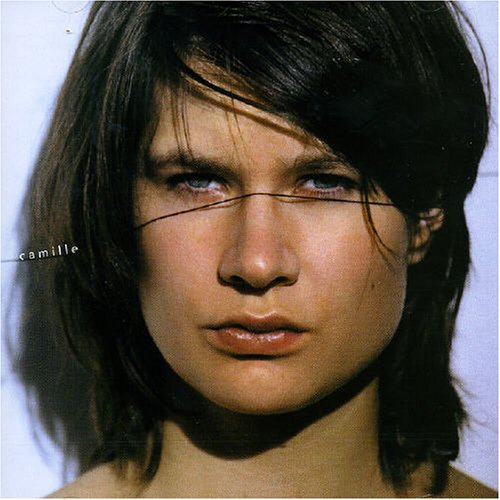
Camille - Les Sac Des Files

Camille En Marche ArriĆØre

She's not the only one who can come out to play! These reviews in reverse track her la difference across four releases in as playful a way I can to match Camille's unconventional musical approaches. Short shrift form me by comparison, I accept.

So ironically, this debut album is her most conventional and, I suspect, preferred by many listeners for that. Largely acoustic, these songs are, naturally, beautifully sung - and with less vocal acrobatics and attendant voice-tumblers it is an immediate and rich aural experience. Essentially pop songs, for example fourth track La Demeure D'un Ciel, they play our prettily rather than playfully. Second Elle S'en Va is essentially stripped bare to guitar, and foregrounds her sweet singing. Sixth Les Ex is more jolly and quick and lyrically humorous [I suspect!] but still relatively straightforward, apart from vocal trumpets. Ninth Paris provides big band backing and is the most elaborate in this sense. If any listener was concerned that Camille is more clown than chanteuse this would be a good place to begin to confirm her utter class.


Camille - Le Fil [2005], Music Hole [2008]

Camille Encore

Both these albums portray the vocal virtuosity of this French songstress and also the playfulness and experimentation underpinning her performances.


Sophomore release Le Fil is the most consistently vocal of the three I have reviewed [though depending on the order read....]. It is sung entirely in French which adds an obvious nuance. Each song is literally linked by le fil, a drone-thread that is most evident at the beginning of each new track but which merges easily within and across each song as it is being sung. There is plenty of the playful vocal pyrotechnics, with percussive sounds and multi-tracking of the vocal, but it isn't as infantile [not a criticism] as it is on her latest release. Stunning singing.


Music Hole is more expansive, with other vocals/voices, and there is occasionally a soul/funk groove as with opening track Gospel With No Lord. The whole album is more varied and experimental with the layering and contortions of the singing and accompanying vocals. Kfir is again quite funky but also permeated with plosive breathsounds and bassbeats and then tangential sweet vocal harmonising and then a gospel chorus. The following The Monk is gloriously operatic. Complex and creative stuff, perhaps genius.

Tuesday, 1 November 2011

John Mayall and the Bluesbreakers - Spinning Coin [1995]

More Mayall

When I began this blog the idea was to celebrate the music I was listening to on a daily basis, sharing with others but also in a way logging my listening habits for self-reflection. I think I've kept to that though of late I find myself focusing on reviewing new releases that still form a key part of the listening experience. I have also expanded to sharing my poetry and that of others. Thanks to those who read and comment which enriches a process I will continue.

This is by way of commenting now on my actual current listening. I've had this John Mayall for some time, but haven't fully listened. It's excellent, a broad rockblues flavour rather than pure blues - with some Country seasoning, opening track When The Devil Starts Crying written by Jim Lauderdale -  but with the unmistakable Mayall vocal and star playing from all throughout [Buddy Whittington, recently reviewed, on guitar]. Nothing more needs to be said, apart from the realisation that there's still so much of his material for me yet to discover. And I love that.

Asking the Leaf

What if that leaf was a kingfisher
caught out of the corner of my eye

hovering above the river,

the autumn colours flapping in the late
afternoon’s light, a momentary
if ultimately teasing flight? But what
then of all the drowned birds
dead on the river’s bed; and where’s
the surprise in spotting one from
thousands on a tree amongst the other
thousands of trees in a forest of feathers
in this autumnal trickery?

And don’t get me going about the
complexities of Spring and summer.